Memory and the Paris riots
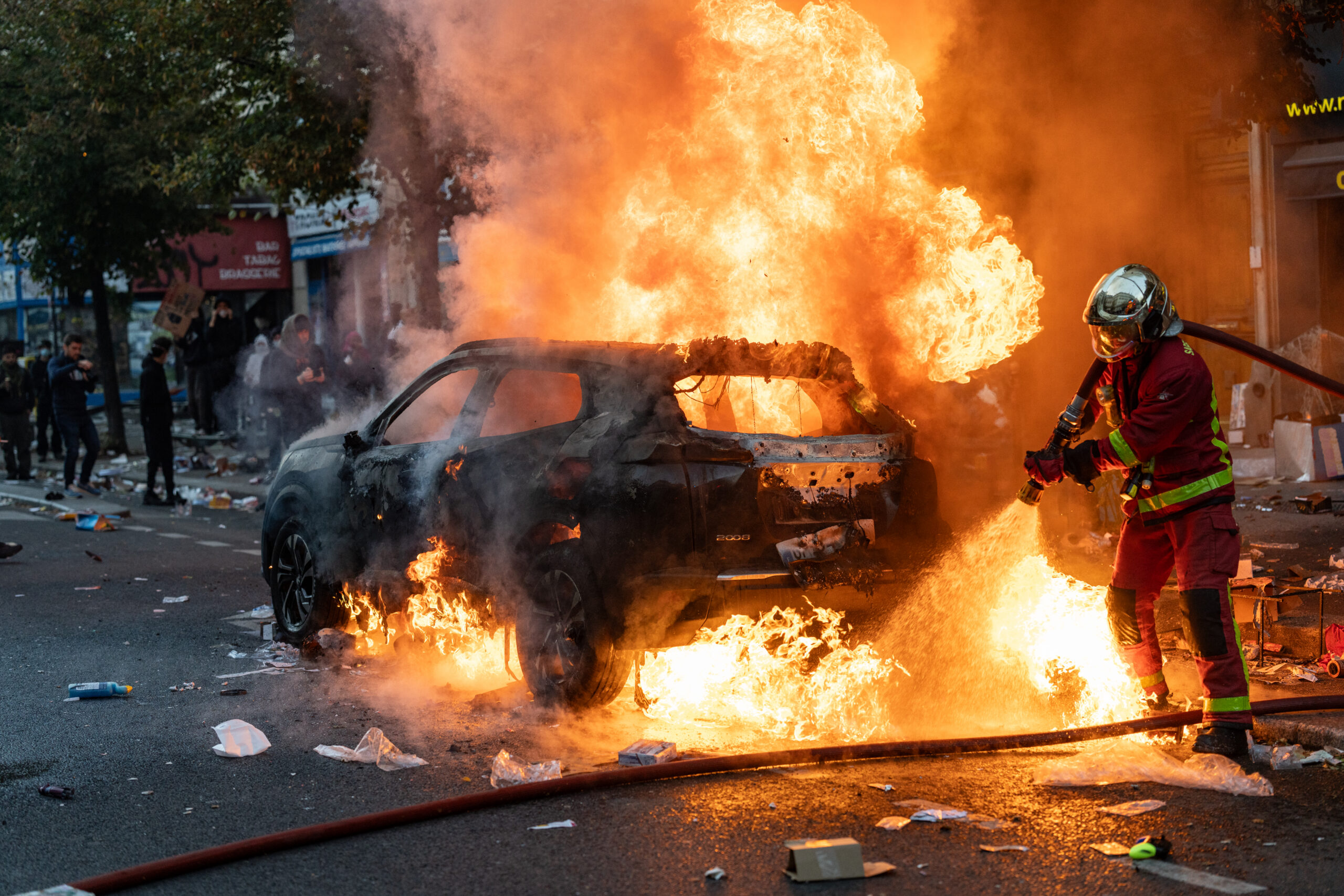
Plumes of smoke rising into the famous Paris skyline. An empty Place Vendôme with its towering Napoleonic column. The Ministry of Justice newly repainted in slogans. To see some of the most famous and richest streets in the capital abandoned by the police and in the hands of protesters should feel surreal. But then again this is Paris—where you can barely take a step without stumbling over revolutionary history.
Numerous commentors and state officials seem to forget or ignore that history whenever it comes back. Right now they are busy blaming the so-called “sacking” of Paris and other cities on racailles, the racially charged word for “scum” used to dehumanise the inhabitants of France’s multiracial suburbs, where this movement began. Others blame the casseurs, “wreckers”. And the new enemy appears to be the ultragauche, the “extreme left”. Whichever word is chosen, it is supposed to stand for something separate and alien to France.
Yet anyone who was on the streets of Paris on Saturday 17 October should know that the scenes fit perfectly into French history. Not only was this a reprise of the days of November and December 2018, when the Gilets jaunes were at their height; it was part of a story that reaches back much further.
A demonstration in Paris is inevitably a tour through the history that created modern France.
The day begins around Place de la République. This was meant to be the departure point for two authorised and controlled marches which would be kept far away from the centres of power that people wanted to march to. The police had declared any other movements unauthorised and arrestable. However, long before the scheduled 2pm departure time, the police had already inundated the square with tear gas. Even if you had wanted to join one of the police’s authorised marches you were now safer heading off on unplanned marches around the centre. Thus began a long afternoon of cat and mouse. Groups would form up into blocs of several hundred or a few thousand, and march in the direction of the restricted zones before getting tear gassed and pushed off the major boulevards.
Each time, the crowds reformed in the narrow streets around Les Halles and rue Saint Denis, where it was difficult for the police to pursue. As they did so, these crowds of young people summoned up the ghosts of rebellions past. These very streets saw the peak of the fighting in the 1832 June Rebellion, immortalised by Victor Hugo in Les Misérables. That republican insurrection was bloodily suppressed by the forces of order before being turned into the setting for famous characters by Hugo and Balzac.
After several hours the scene changed. Some groups found an unguarded bridge and crossed the Seine to the left bank, where they marched through the cobbled winding streets of the Latin Quarter. Now it was reminiscent of May 1968, the moment every subsequent social movement in France hopes to emulate. A few thousand students marched past the Sorbonne University leaving rental bikes, bins, and construction material in their wake as makeshift barricades. As one witty placard put it, “generation 6/7 is going to do 68”.
Even once this bloc was scattered by the police, just outside the national assembly, the day was far from finished. Back across the river thousands were converging on Place de la Concorde. The square had been declared off limits, as it leads to the Champs Elyséés, a place dear to the hearts of the Gilets jaunes of 2018, and to the presidential residence at the Elyséé palace. But the police could not prevent the thousands of people marching across the Tuileries gardens, or down rue de Rivoli.
As the crowds marched they occasionally sung the Marseillaise. There are not many moments when a national anthem is called for, but if there is a time and place for the Marseillaise it is when an angry crowd is marching towards a palace. After all, this is what the crowds had done in 1792 when they overthrew the monarchy and stormed the Tuileries palace. That was how the first French republic was born. The riot police of 2026 did a better job of defending a palace than the Swiss guards had done in 1792, and gradually the crowds spread out around the rest of the city.
The early evening gloom mixed with the smoke of fires and the haze of gas as the first windows of banks and shops started to be broken. Perhaps the hundreds who were subsequently arrested and having their express trials reported in the media can take some comfort from the example of Louise Michel. She too was arrested for participation in a demonstration that ended in looting in 1883. The Republican order of the day sentenced her to six years in prison. Now the republic names schools after her, and even rolled out a gold statue of her during the opening ceremony of the 2024 Olympics.
Later, turning on the TV at home takes you back to 1871. A Hôtel de Ville is burning down and a series of ashen faced men are hiding their panic behind severe pronouncements of re-establishing order. You are either with the Republic or with the casseurs, says the prime minister. Back then it was the republic or the commune. The result was the semaine sanglante (bloody week) when the Third Republic was baptised in the blood of the workers of Paris. Now, I suppose we should count ourselves lucky that so far the blood has only flown from the disfigured eye sockets and blown off hands of a few.
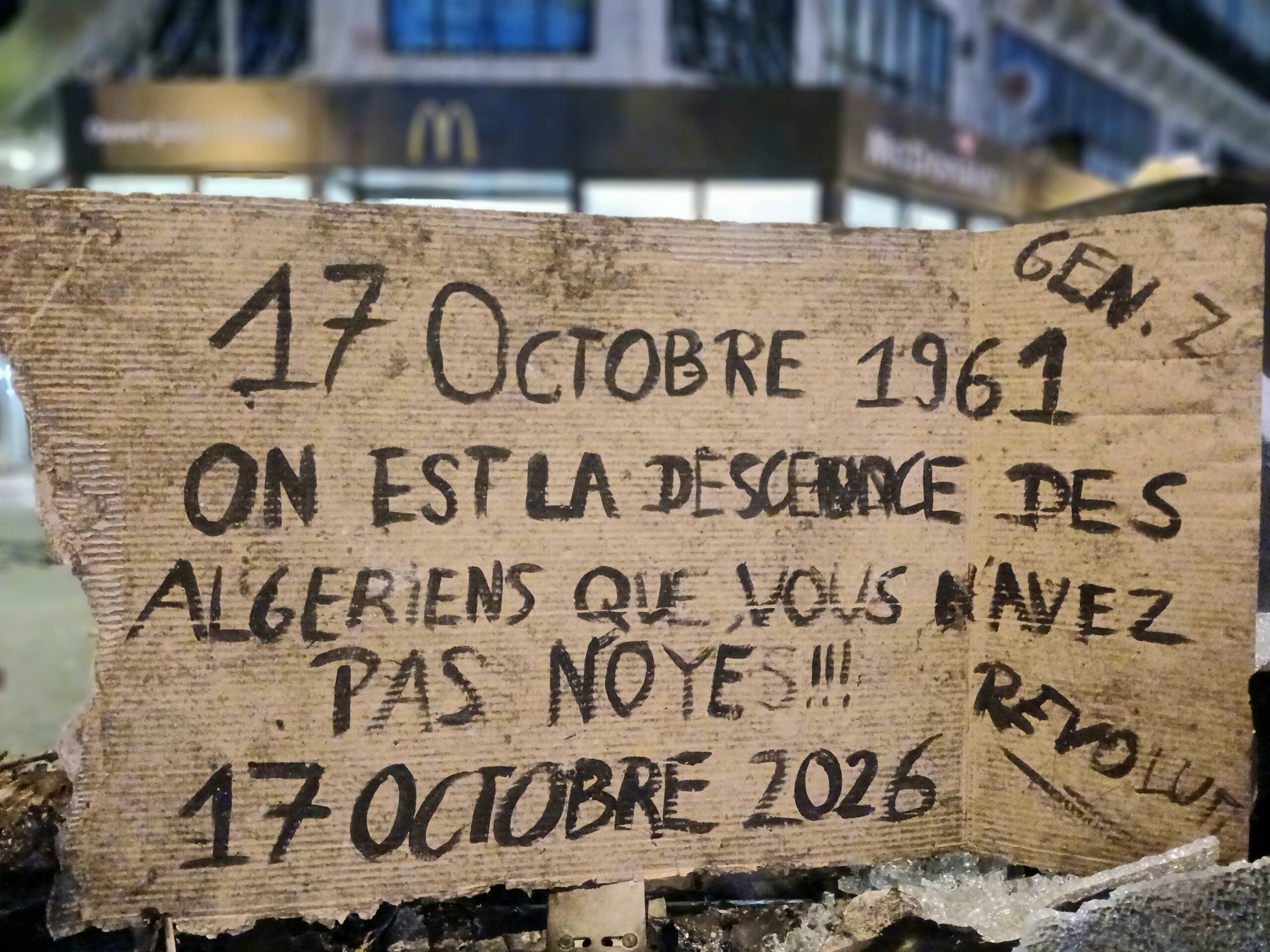
Even the date evokes memories, neither forgotten nor forgiven. 17 October 1961 was the night when police massacred Algerian inhabitants protesting against a curfew. Anywhere between 40 and 200 people were killed, many of them drowned in the Seine. The state long tried to suppress that memory, but the date lives on.
It is too early to tell how 17 October 2026 will go down in French history, but one thing is clear to all but the self-deluded: it was part of a continuing story.
The post Memory and the Paris riots appeared first on Freedom Press.


